Laravel Mail vs MailChimp: Why Developers Are Making the Switch

David Williams
Technical Lead

For years, MailChimp has been the default choice for email marketing. Its friendly monkey mascot and easy-to-use interface made it the go-to for everyone from small bloggers to large enterprises. But as we move through 2026, the landscape has changed. For developers and technical founders, the cracks in the MailChimp model are starting to show. Between skyrocketing costs, restrictive APIs, and a lack of true data ownership, the 'easy' choice is becoming the expensive one. Laravel Mail has emerged as the developer-first alternative that offers professional-grade features without the SaaS baggage. It's not just a change in tool; it's a change in philosophy that empowers technical teams to build better experiences for their users.
The Comparison: MailChimp vs. Laravel Mail
When evaluating these two platforms, it's important to look beyond the surface-level features. Both can send emails, manage lists, and track opens. However, the underlying philosophy and cost structure couldn't be more different. One is a walled garden; the other is an open platform designed to be integrated deeply into your own stack. MailChimp is built for the casual marketer who wants a 'turnkey' solution; Laravel Mail is built for the technical team that demands performance, flexibility, and economic sanity. Check out our 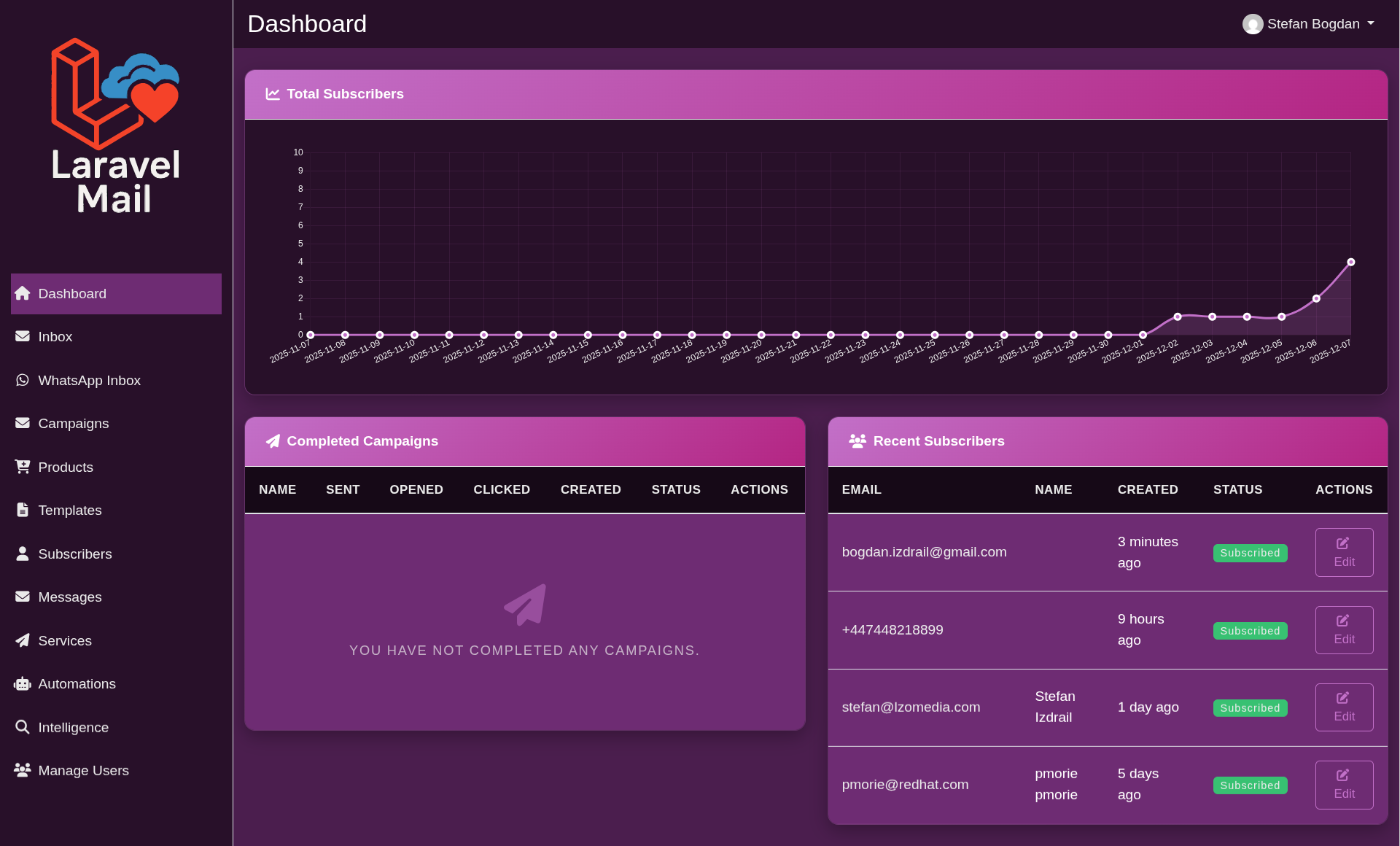 to see the level of detail we provide.
| Feature | MailChimp | Laravel Mail |
|---|---|---|
| Pricing | Scaling (per subscriber) | Flat Free core + £50 one-time subscription |
| Data Ownership | Third-party hosted | 100% Self-hosted |
| Deliverability | Shared IP pools | Dedicated infrastructure |
| API Access | Rate-limited | Unlimited local access |
The Pricing Trap: Scaling Fees vs. Flat Costs
The most immediate difference is the price. MailChimp's pricing model is built on your success. As your list grows, your monthly bill increases—often reaching hundreds or even thousands of dollars for lists that are still maturing. This is what we call the 'Subscriber Tax.' It's a fundamental conflict of interest: the platform that should be helping you grow actually penalizes you for doing so. This creates a ceiling on your lead generation efforts, where you're constantly evaluating if a new subscriber is 'worth' the extra monthly cost. With Laravel Mail, you can grow your list without fear of rising costs.
Example: The Cost of Growth
Imagine you have a list of 50,000 subscribers. On MailChimp's 'Standard' plan, you could easily be paying over $350 per month. If your business is seasonal or if you're in a high-volume, low-margin industry, that's a significant hit to your bottom line. With Laravel Mail, the software cost is a flat Free core + £50 one-time add-on bundle. Even when you add the cost of a high-quality VPS and a delivery service like AWS SES (which charges $0.10 per 1,000 emails), your total monthly bill for sending to those 50,000 people once a week would be well under $50. That's a 7x difference in cost, and the gap only widens as you grow. For a business with 250,000 subscribers, the savings can exceed $10,000 per year.
Data Ownership: Your Database, Your Rules
When you use MailChimp, you're essentially 'renting' access to your own audience. Exporting data is a chore, and you're always one terms-of-service update away from losing access. Have you ever tried to run a complex query across your subscriber list and your application's purchase history? With MailChimp, you're looking at complex API integrations or expensive third-party data syncing tools. With Laravel Mail, your data is *right there*. You can manage your audience directly, as shown in our 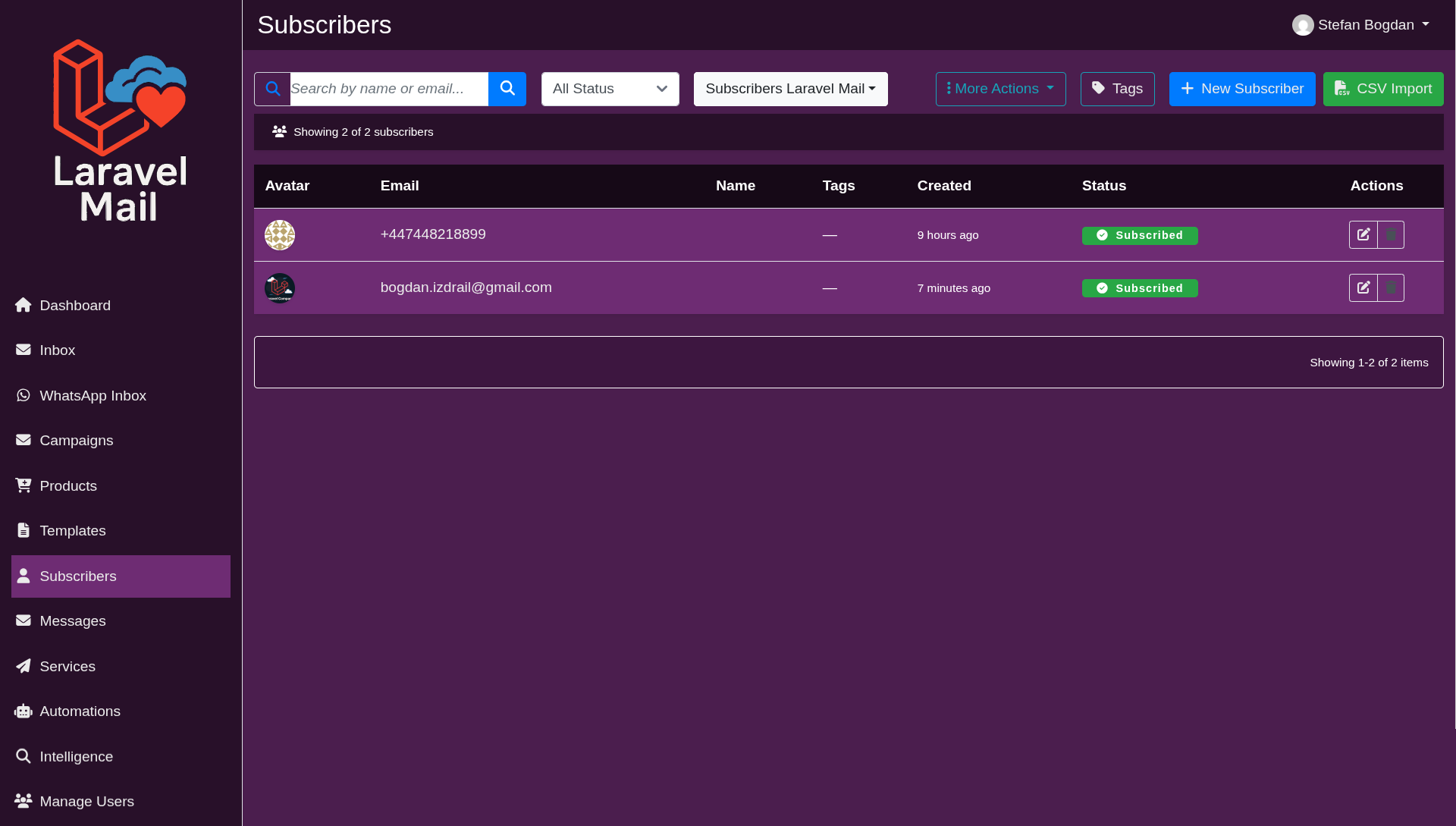 .
.
The Power of SQL and Real-Time Insights
Because Laravel Mail is self-hosted, your subscribers live in a standard relational database (like MySQL or PostgreSQL). If you want to know which users in Paris haven't opened an email in 3 weeks but *have* spent more than $50 in your store, it's a simple SQL join. You don't need to 'sync tags' or 'update custom fields' via a slow API. You have the power of your entire application database at your fingertips. This allows for hyper-personalization that is simply impossible on a disconnected SaaS platform. You can trigger emails based on complex database states, user behavior within your app, or even external real-time data feeds. This is a core part of what we discuss in our Warrior Forum solutions post.
Deliverability and the 'Free' Tier Illusion
Many start with MailChimp's free tier, only to find their emails landing in the 'Promotions' tab or, worse, the spam folder. This is often because free accounts share IP pools with thousands of other users, some of whom may have poor sending habits. You are judged by the company you keep. In the SaaS world, you have little control over who else is 'using' your IP reputation. Laravel Mail allows you to use dedicated infrastructure (like AWS SES, Resend, or your own SMTP via KumoMTA), ensuring your sender reputation is yours alone to manage and protect. We discuss this further in our complete guide to deliverability.
Dedicated IPs for Professional Senders
For serious senders, a dedicated IP is essential. MailChimp offers these, but usually only on their most expensive 'Premium' plans. With Laravel Mail and a service like AWS SES, you can get a dedicated IP for a small monthly fee, giving you total control over your sender reputation. No more worrying about what some other company is doing on 'your' server. This level of control is what allows Laravel Mail to maintain 99%+ inbox placement for our most active users. If you encounter issues, our guide on dropping open rates can help you diagnose the problem.
The Developer Experience (DX)
Laravel Mail isn't just a marketing tool; it's a developer platform. We've spent countless hours ensuring that the 'DX' is superior to any SaaS alternative. We know that developers hate roadblocks, and we've worked hard to remove them. We provide powerful 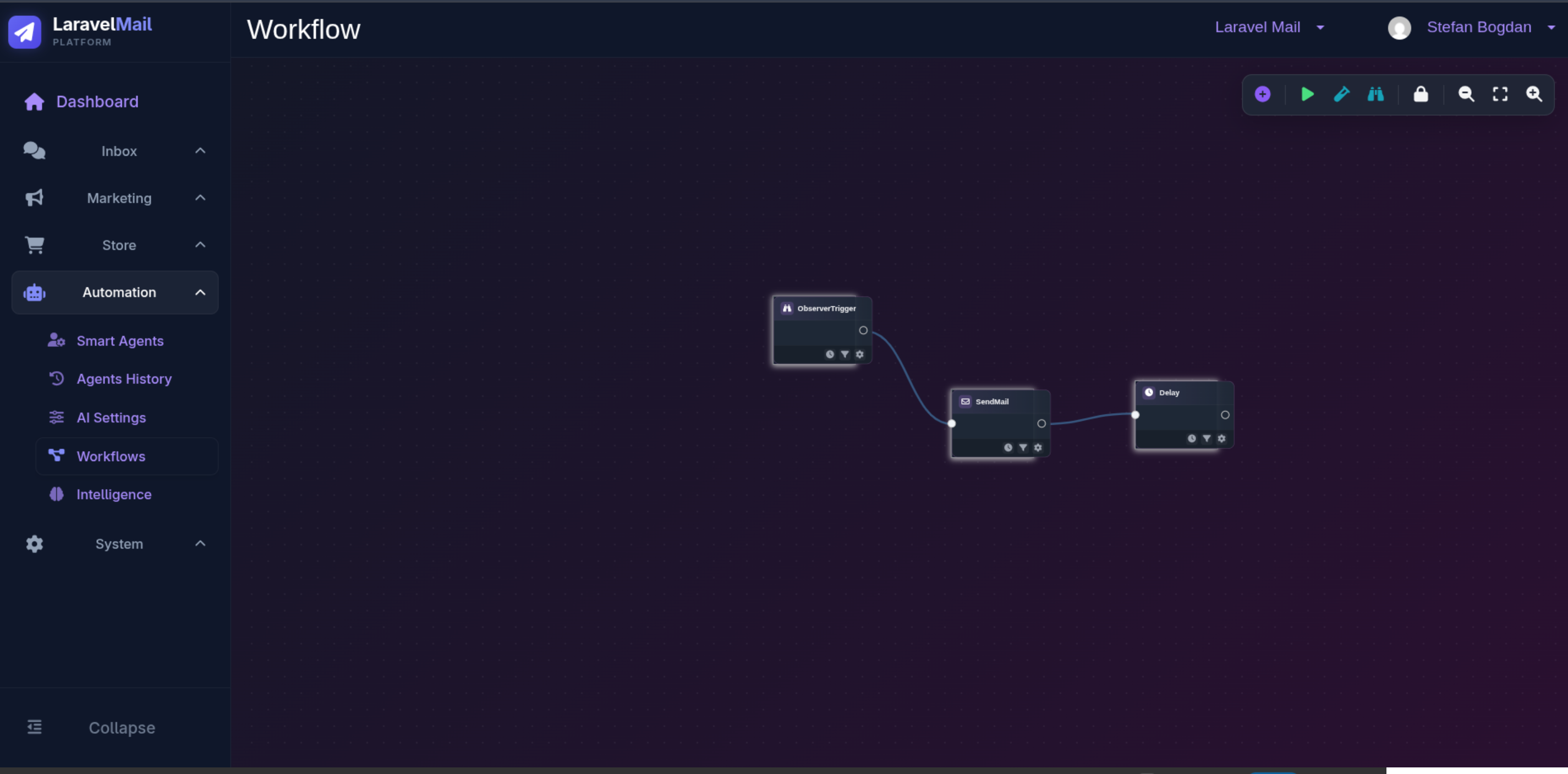 that developers can extend and customize.
- Native Laravel Integration: Use the tools you already know. Mailable classes, notification channels, and the powerful queue system are all at your disposal. If you can write a Laravel app, you can master Laravel Mail in an afternoon.
- Clean, Documented API: No more wading through hundreds of pages of inconsistent API documentation. Laravel Mail's internal API is intuitive and follows standard Laravel patterns.
- Multi-Tenant Capabilities: Built-in support for multiple workspaces. Run separate campaigns for different clients or products from a single installation. This is a game-changer for agencies who previously had to manage dozens of separate MailChimp accounts and logins.
- No Rate Limits: When you're querying your own database or sending via your own relay, there are no artificial rate limits. Export a million subscribers in seconds, not hours.
The Hidden Costs of MailChimp
It's not just the subscription fee. MailChimp has several 'hidden' costs that developers often overlook until it's too late:
- Data Lock-in: The harder it is to leave, the more they can charge you. MailChimp makes it easy to get data in, but much harder to get it out with all its history intact.
- Feature Bloat: You're paying for a website builder, a social media manager, and a postcard service that you probably don't use. Laravel Mail focuses on being the best at one thing: email marketing.
- Support Lag: When things go wrong with your delivery on a SaaS platform, you're at the mercy of their support queue. With a self-hosted solution, you have the visibility to diagnose and fix issues yourself, or work directly with your infrastructure provider.
- API Complexity: Maintaining a robust integration with a third-party API is a constant maintenance burden. With Laravel Mail, the 'integration' is just a standard part of your application code.
Case Study: A SaaS Startup's Migration
'AppFlow,' a project management SaaS, reached 20,000 users. Their MailChimp bill was approaching $200/month. They wanted to start sending daily 'productivity tips' but realized the cost would be prohibitive as they continued to scale. They spent one afternoon migrating to Laravel Mail. Not only did their monthly bill drop to $15 (server + SES), but they were able to use their own application data to personalize the tips based on which features the user was actually using. Their engagement rates tripled because the content was finally relevant and real-time. They are now at 100,000 users and their email costs have barely increased, whereas on MailChimp they would be paying over $600/month.
Conclusion: Scale with Ambition, Not Expense
If you're building a product that's meant to grow, don't start with a platform that penalizes that growth. Laravel Mail gives you the professional-grade features of MailChimp with the control and cost-efficiency of a self-hosted solution. It's the logical choice for the modern developer who values independence, scalability, and technical excellence. Ready to make the switch? Check out our step-by-step installation guide and start your journey toward email independence. Don't let your email provider be the bottleneck to your success. You can also compare us with other open-source alternatives to see why we're the best fit for your team.
Ready to switch?
Learn how easy it is to migrate your list to Laravel Mail. Our migration tools make it a breeze to bring over your subscribers and history.
Migration Guide